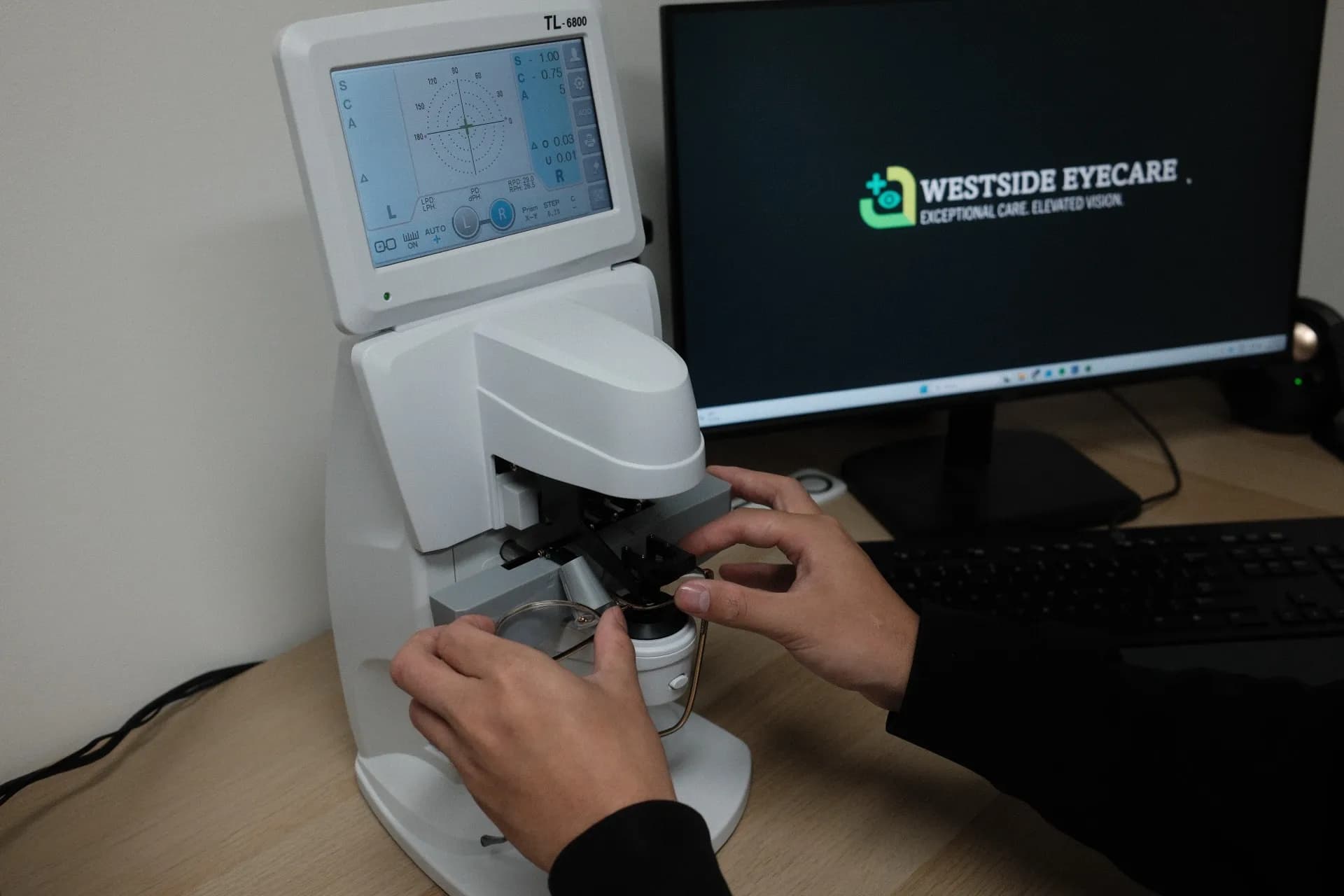
Comprehensive Eye Exams
One-hour appointments with your optometrist in Deer Park. Time to be thorough, time to explain, and time to answer every question.
Eye care that puts you first
We believe your eye exam is more than a routine prescription check. It's an opportunity to assess the health of your eyes and make sure your vision is at its very best. That's why every comprehensive exam at Westside Eyecare is a full one-hour appointment with your optometrist, with time to thoroughly assess your vision and eye health, explain what we find, and answer every question you have.
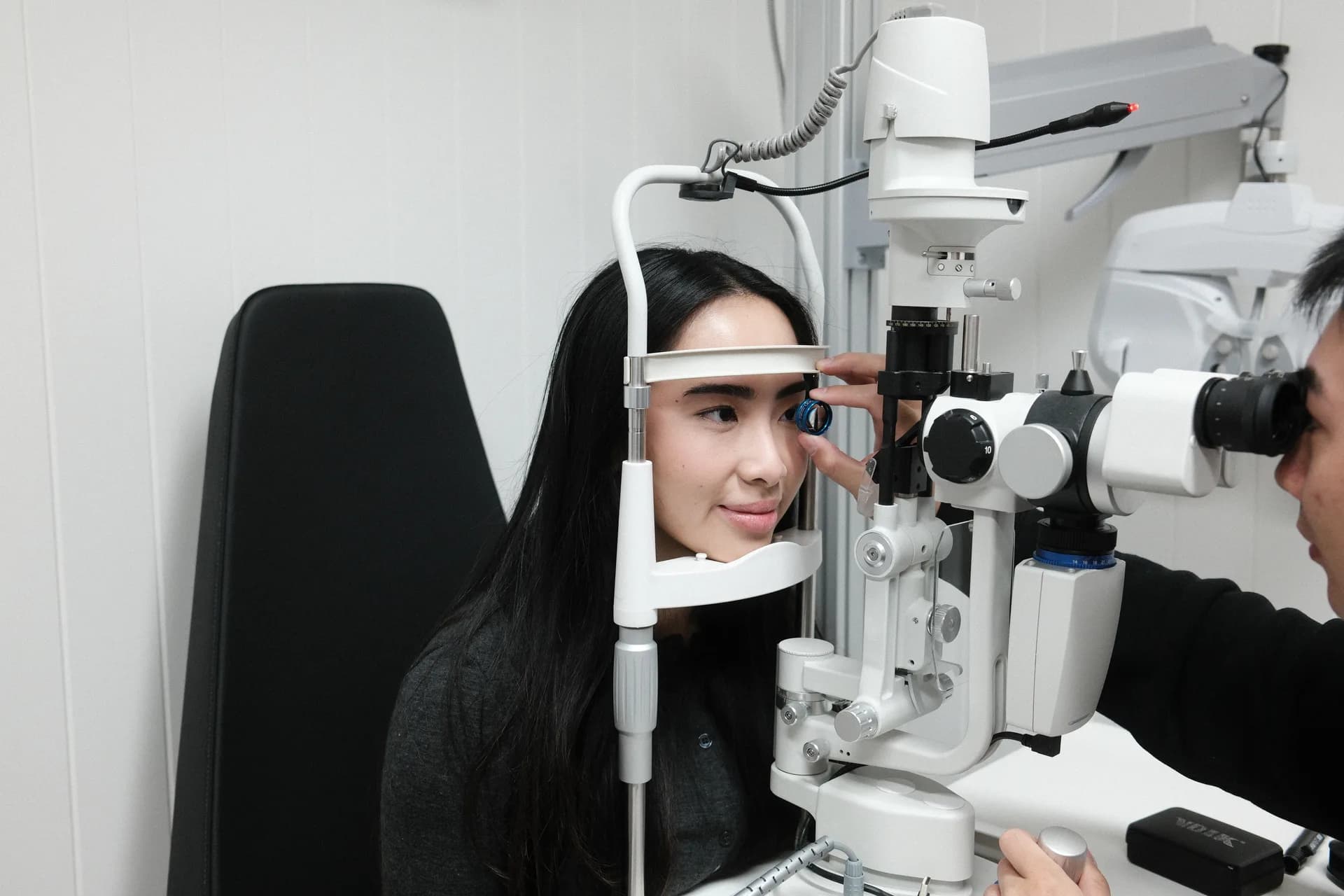
What's involved in an eye exam
A Chat About You and Your Eyes
We start by understanding your lifestyle, visual demands, symptoms, and medical history to guide the rest of the exam.
Visual Acuity Test
Measuring how clearly you can see at distance and near, with and without your current correction.
Retinoscopy and Refraction
Determining your optical prescription using a combination of objective measurement and careful refinement with your feedback.
Pupil Assessment
Checking how your pupils respond to light, which helps assess the health of the nerve pathways connecting your eyes to your brain.
Tonometry
Measuring the pressure inside your eyes, an important screening tool for glaucoma.
Ocular Health Assessment
A detailed examination of the front and back of your eyes, including the cornea, lens, retina, and optic nerve.
Additional tests when needed
Depending on your history, symptoms, or what we find during your exam, we may recommend one or more of these additional tests.
Dilated Fundus Exam
Eye drops are used to widen the pupil, allowing a more detailed view of the retina, optic nerve, and blood vessels.
Visual Field Test
Maps your peripheral vision to detect blind spots or field loss associated with glaucoma and neurological conditions.
Corneal Topography
A detailed surface map of the cornea used to assess curvature, astigmatism, and suitability for contact lenses.
Central Corneal Thickness
Measures the thickness of the cornea, which can influence intraocular pressure readings and glaucoma risk assessment.
Binocular Estermann
A visual field test assessing your functional field of view with both eyes open, commonly required for driving assessments.
Colour Vision Screening
Tests your ability to distinguish colours, relevant for certain occupations and detecting inherited colour vision deficiencies.
Signs you need an eye exam
Blurred or fluctuating vision
Difficulty seeing clearly at distance or near, or vision that shifts throughout the day.
Frequent headaches
Recurring headaches, especially after reading or screen work, can indicate an uncorrected vision problem.
Eye strain or fatigue
Eyes that feel tired, heavy, or uncomfortable after sustained visual tasks.
Difficulty reading up close
Holding your phone or books further away to see clearly, or needing more light than usual.
Red, dry, or irritated eyes
Persistent redness, dryness, or a gritty sensation can point to underlying conditions worth investigating.
It has been over a year since your last exam
Many eye conditions develop gradually without obvious symptoms. Annual exams help catch changes early.
Frequently asked questions
We recommend a comprehensive eye exam every year. Annual exams allow us to detect changes in your vision and eye health early, when they are most manageable. If you have diabetes, glaucoma, or other risk factors, more frequent visits may be needed.
Yes. We are a bulk billing practice for comprehensive eye exams, so if you hold a valid Medicare card there is nothing to pay on the day. Some specialty services and additional diagnostic tests are privately billed when clinically indicated, and we will always tell you the cost before going ahead.
We schedule one-hour appointments for comprehensive eye exams. This allows enough time for a thorough evaluation and gives you the opportunity to ask any questions you may have about your vision or eye health.
No. You do not need a referral from a GP to see an optometrist in Australia. You can book directly by calling us on (03) 9361 2777 or booking online.
Please bring your Medicare card, any private health insurance details, your current glasses or contact lenses, and a list of any medications you are taking. If you have been referred by another practitioner, please bring the referral letter.
Yes. We recommend children have their first eye exam before starting school, ideally around age four to five. Many vision problems in children have no obvious signs, and early detection is important for learning and development.
Written by Dr Steven Vu, BVisSc MOptom, optometrist at Westside Eyecare, Deer Park. Last updated 16 September 2026. This page is general information, not a substitute for a consultation.
Related services
Due for an eye exam?
Book your comprehensive assessment at our Deer Park practice.