Children's Vision Clinic
Children's eye exams in Deer Park. Children don't always tell you when they can't see well, and problems are easiest to manage when caught early.
Why early eye exams matter
Between the ages of 3 and 14, your child's visual system is still developing. Conditions like lazy eye (amblyopia), eye turns (strabismus), and focusing problems are far more responsive to treatment when they're picked up early.
The challenge is that children rarely complain about their vision. They assume everyone sees the way they do. A comprehensive eye exam can uncover issues that might otherwise go unnoticed until they start affecting learning, coordination, or confidence.
Children's eye exams are bulk billed for anyone with a Medicare card. If any additional testing is needed, we'll let you know the cost beforehand.
Signs your child may need an eye exam
Squinting or closing one eye
Frequently narrowing or shutting one eye to try to see more clearly.
Sitting too close to screens or books
Moving unusually close to the TV, tablet, or reading material.
Complaints of headaches or tired eyes
Recurring headaches or eye strain, especially after school or screen time.
Difficulty concentrating at school
Trouble focusing on the board or losing interest in visual tasks.
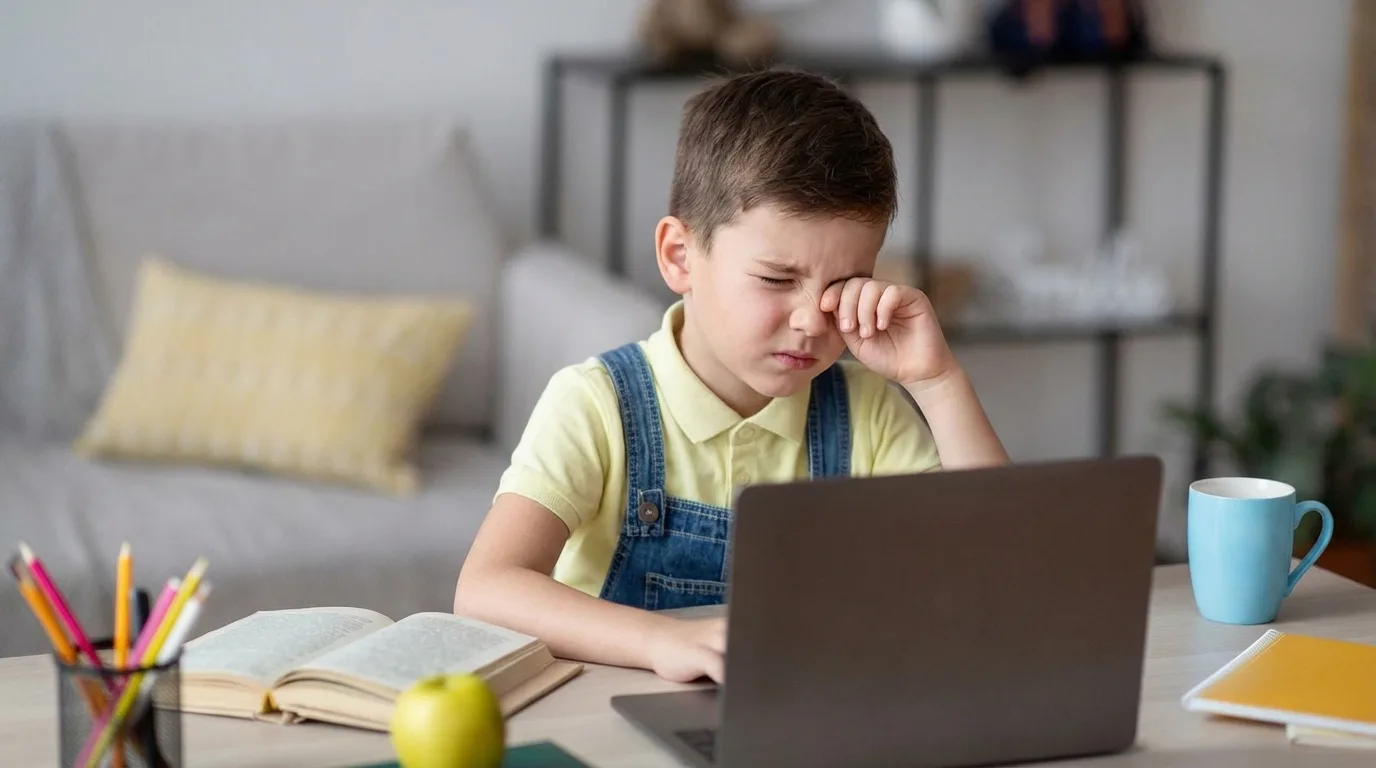
Rubbing eyes frequently
Persistent eye rubbing that isn't related to tiredness or allergies.
Tilting or turning their head to see
Angling their head to one side when looking at something in the distance.
When should your child have an eye exam?
We recommend a first eye exam by age 3 to 4, ideally before starting school. After that, children should have their eyes checked every year. If you notice any signs of a vision problem or there's a family history of eye conditions, it's worth booking sooner.
Even if your child hasn't mentioned any problems or shown obvious signs, that doesn't mean their vision is fine. Many children don't realise what they're seeing isn't normal. A routine eye exam can pick up on things that aren't always visible at home or in the classroom.
Frequently asked questions
We recommend a first comprehensive eye exam before your child starts school, ideally around age four to five, and then annually. Between ages 3 and 14 the visual system is still developing, and conditions like lazy eye (amblyopia), eye turns (strabismus), and focusing problems respond far better to treatment when picked up early.
Yes. Children rarely complain about their vision because they assume everyone sees the way they do, so a problem can go unnoticed until it starts affecting reading, coordination, or confidence at school. A school vision screening checks distance vision only and is not a substitute for a comprehensive exam.
Common signs include squinting or closing one eye, sitting very close to screens or books, tilting or turning the head to see, persistent eye rubbing unrelated to tiredness, complaints of headaches or tired eyes after school, and difficulty concentrating on visual tasks. Any of these is worth an exam.
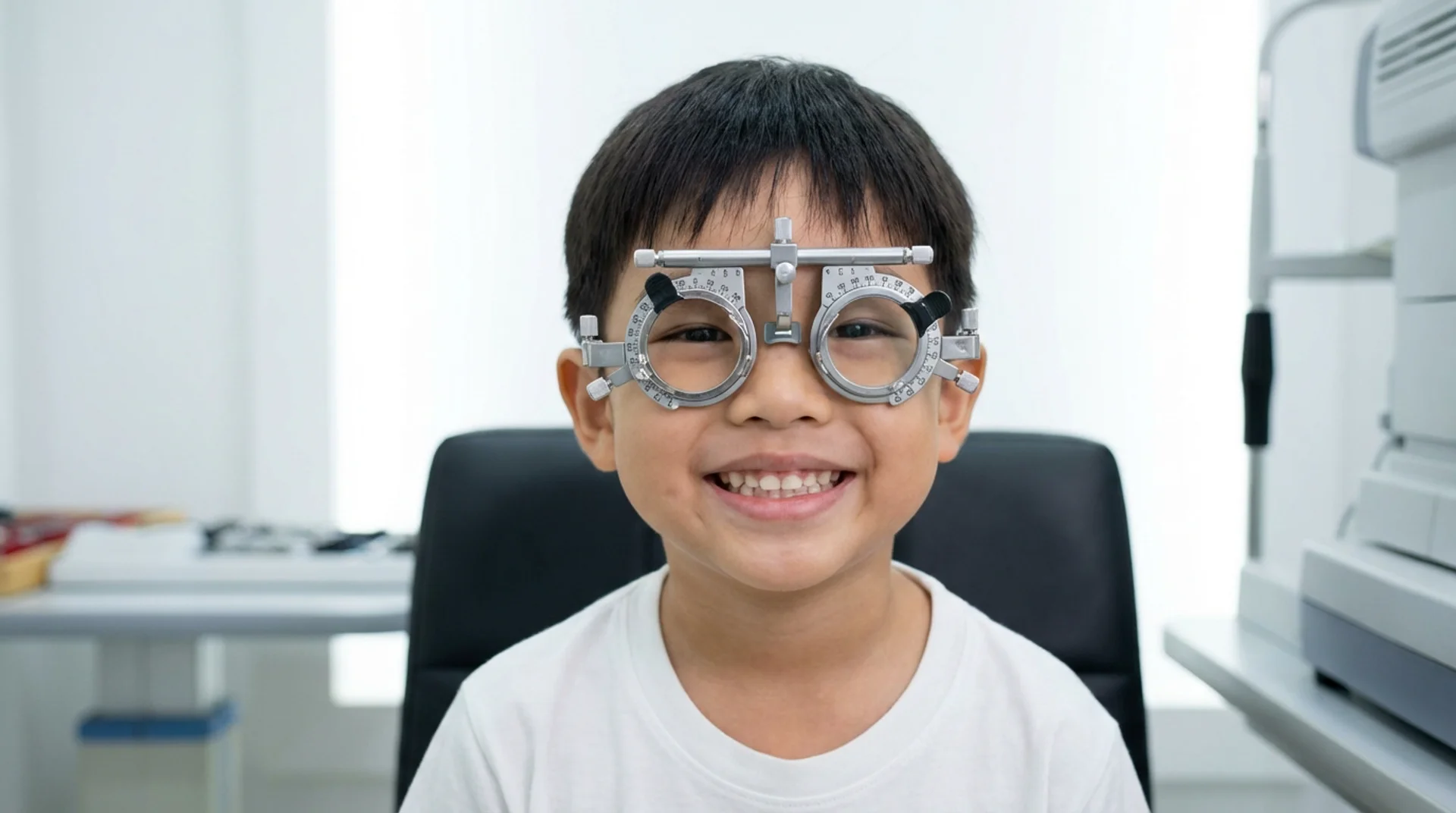
The appointment is a full hour, which gives your child time to settle and us time to be thorough. We assess how clearly each eye sees, how well the eyes work together and focus, and the health of the eyes themselves. Tests are adapted to your child's age, and nothing requires them to read letters if they are not yet reading.
Yes. Children's comprehensive eye exams are bulk billed for anyone with a valid Medicare card, so there is nothing to pay on the day. If additional testing is clinically indicated, we will explain what it is and what it costs before proceeding, so there are no surprises.
Short-sightedness that increases year on year is called progressive myopia, and there are established approaches to slowing it, including atropine drops, myopia control spectacle lenses, soft contact lenses designed for myopia control, and overnight Ortho-K lenses. Our myopia control clinic covers which of these may suit your child.
Written by Dr Steven Vu, BVisSc MOptom, optometrist at Westside Eyecare, Deer Park. Last updated 16 September 2026. This page is general information, not a substitute for a consultation.
Time for your child's next eye exam?
Book an appointment at our Deer Park practice.